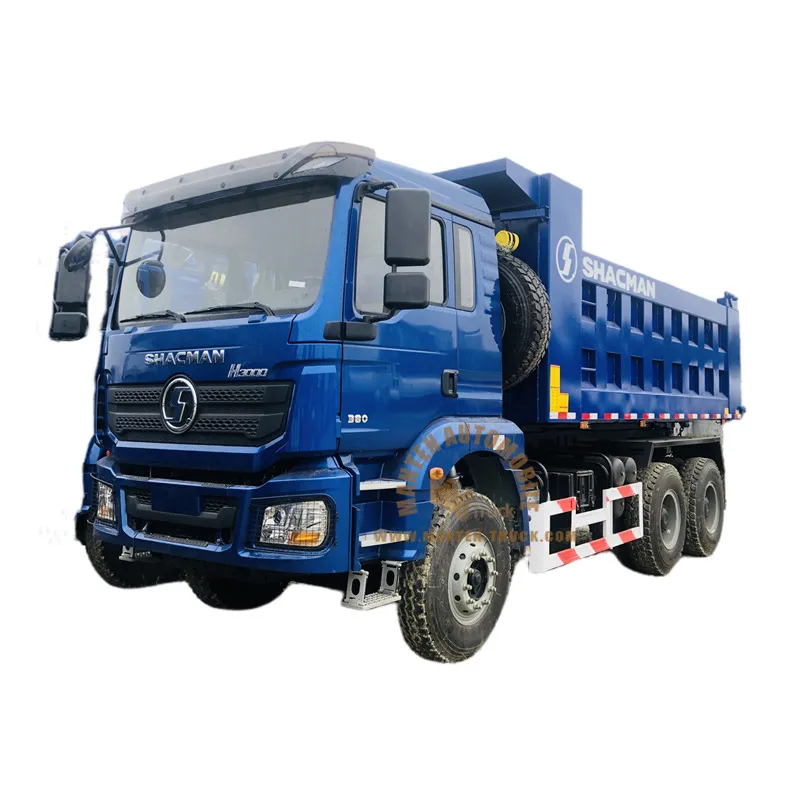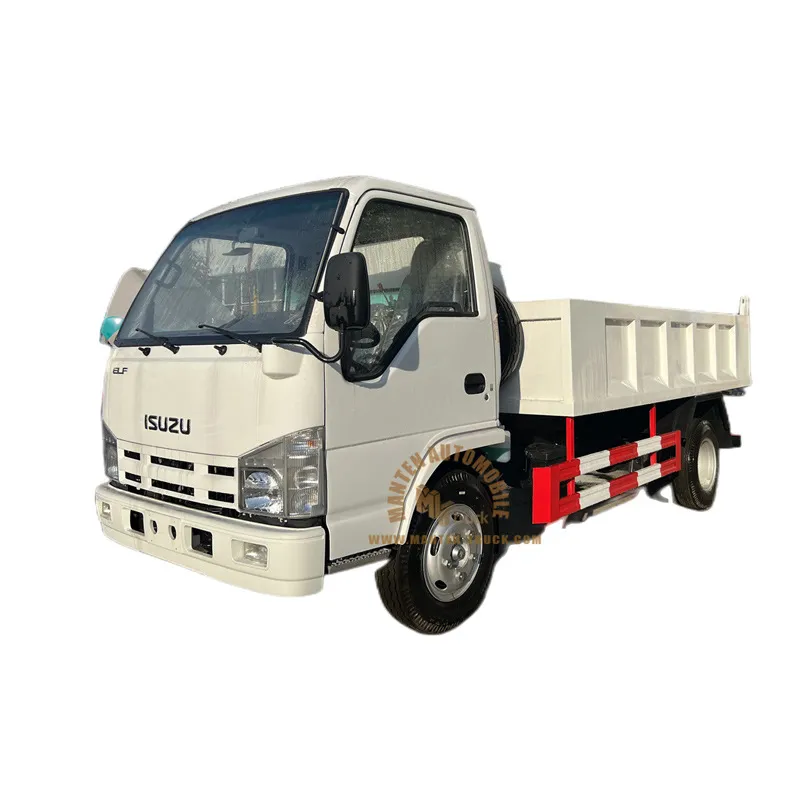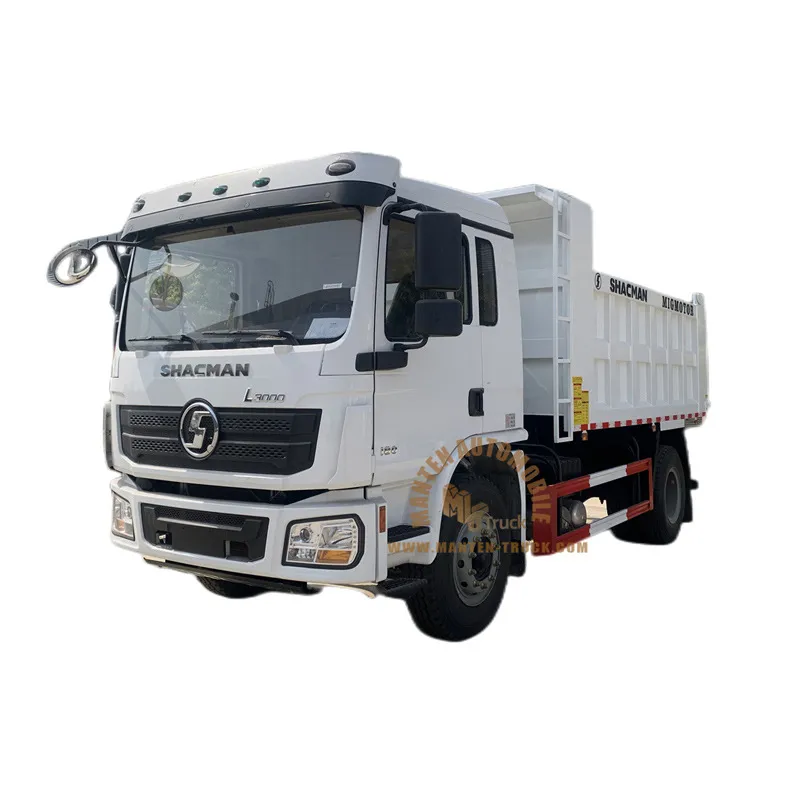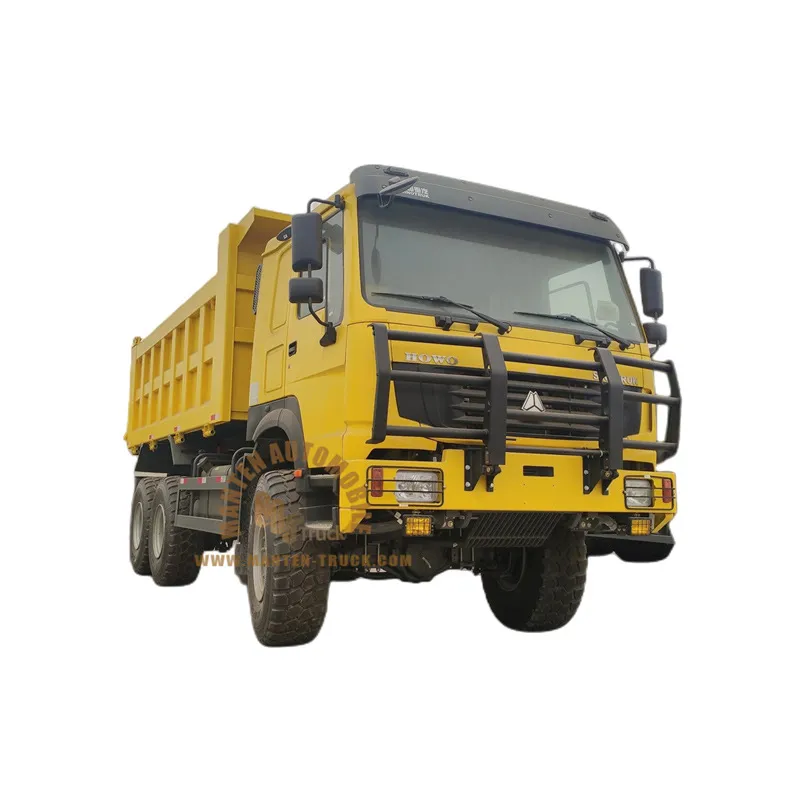
The main types of dump trucks can be described by unloading direction, vehicle combination and operating terrain. These are separate classification axes: a rear tipper may be a rigid road truck, while another rear-unloading vehicle may be an articulated off-highway machine or a tractor with a tipping trailer. Buyers get a clearer comparison when they describe all three characteristics together.
For a construction or materials business, the practical choice starts with the complete journey. The vehicle must collect the material, travel the intended route, reach the discharge position and unload under suitable site conditions. Body volume is only one part of that requirement. Material density, permitted masses, chassis configuration and unloading space can change the decision.

Start with the unloading arrangement. Rear tippers discharge behind the vehicle; side tippers discharge to a specified side. Some designs offer more than one tipping direction, but that capability must be established for the particular body and chassis combination. A category name alone does not describe its available configurations.
Next identify the vehicle combination. A rigid tipper carries its body on the truck chassis. A tipping semitrailer forms a combination with a separate tractor. Off-highway equipment introduces another distinction involving the machine's intended operating environment. The word articulated can describe different vehicle arrangements, so explain whether it means an articulated hauler or a tractor-semitrailer combination.
Finally describe the route: public roads, prepared construction access or rough working areas. A truck that travels successfully on one route is not automatically suitable for every quarry floor or stockpile approach. Record gradients, surface condition, turning space and any road restrictions before comparing catalogue photographs.
A rear tipper needs a suitable discharge area behind the vehicle and space for the raised body. Side unloading changes the direction of material placement and the clearance required alongside the truck. Neither arrangement eliminates the need to assess ground condition, vehicle stability and the surrounding work area.
The UK's HSE guidance on tipping emphasizes factors such as suitable ground and overhead obstructions. This is a useful site-assessment reference, while the applicable operating rules and equipment instructions must be established for the destination. It does not provide a universal site approval for an imported truck.
A buyer should therefore send a discharge-area sketch with the enquiry. Show the intended material placement, approach direction, available space and overhead features. Ask the body supplier to identify the required operating envelope for the proposed design. Side tippers are discussed here as an industry type; their availability from any manufacturer needs a separate product confirmation.

A rigid truck brings the cab, chassis and tipping body into one vehicle specification. Its suitability depends on wheelbase, axle arrangement, body design and the actual access route. A tipping semitrailer adds a tractor-trailer interface and requires the complete combination to be assessed, including coupling, braking and mass distribution.
Comparison field | Rigid dump truck | Tractor with tipping semitrailer |
Vehicle arrangement | Body carried on the truck chassis | Trailer coupled to a suitable tractor |
Access assessment | Complete truck dimensions and turning path | Complete combination and articulation path |
Mass review | Truck, body, load and axle distribution | Tractor, trailer, coupling and axle distribution |
Procurement scope | Coordinated chassis and body specification | Trailer specification plus tractor compatibility |
Unloading assessment | Body-specific envelope and site conditions | Combination-specific envelope and site conditions |
These differences do not establish an unconditional winner. Compare usable load per trip, route access and fleet organization using actual candidate specifications. A fleet with interchangeable tractors may evaluate a trailer arrangement differently from a contractor needing one self-contained vehicle at multiple small sites.
Separate the purchase boundary from the operating boundary. A quotation for a trailer may exclude the tractor, while an advertised truck price may use a chassis specification different from the buyer's destination requirements. List the included equipment before making a cost comparison.
Material and route should be evaluated together. Dense aggregate can reach a mass limit before filling the body. A lighter material may use more volume, but its loading pattern, retention and discharge behavior still matter. Wet or cohesive material can behave differently from freely flowing dry aggregate.
For an initial screening calculation, material mass equals loaded volume multiplied by the applicable bulk density. The density must represent the delivered material and condition. This estimate does not replace the truck's approved masses, axle-load assessment or weighing records.
Job information | Why it changes the specification |
Material and bulk density | Connects body volume with expected load mass |
Particle size and loading method | Informs body construction and loading impact review |
Moisture and discharge behavior | Helps assess body shape and material release |
Route surface and gradient | Informs chassis and traction discussions |
Unloading area and obstructions | Determines the required clearance assessment |
Road and axle restrictions | Constrains the usable loaded configuration |
The HSE quarry tipping guidance also illustrates why the condition of the discharge location belongs in planning. A quarry operating area and a public-road delivery bay should not be treated as interchangeable environments simply because the same material is being carried.

Use the current dump truck range to identify candidate configurations, then request a comparison sheet for the actual destination and job. Record body dimensions and volume, chassis model, wheelbase, gross and unladen masses, axle ratings, lifting arrangement and overall dimensions. Identify which figures are provisional and which belong to the proposed completed vehicle.
Ask how optional equipment changes the mass budget. Liners, covers, toolboxes and other additions use part of the vehicle's carrying allowance. A larger body or stronger construction can be appropriate for the task, but it can also alter the relationship between vehicle mass and useful load. Compare the final configuration rather than a base chassis figure.
Manten's dump truck export example can provide context for a published vehicle project. It should not substitute for the specifications and destination documents of a new order. Likewise, an enquiry for a side-unloading body or tipping trailer requires confirmation of current supply scope rather than an assumption based on an industry classification.
Load retention is another purchasing field. The UK's official guidance on securing loads explains the importance of a suitable load-securing system in its jurisdiction. Ask for the retention and covering arrangement required by the intended material, vehicle and destination instead of treating an open body as a complete transport specification.

Compare the complete delivery cycle as well as the vehicle specification. Record loading access, route length, unloading access and the return journey. If one candidate requires a different loading position or cannot reach a particular discharge point, include that difference in the route assessment. A larger theoretical load is not useful on a route the vehicle cannot serve.
Ask the purchasing team to keep a short exception list with the comparison sheet. It should identify missing data, optional equipment and configurations awaiting confirmation. Resolve those items before treating two offers as technically equivalent or presenting a body-volume comparison as a payload comparison.
The terms often refer to vehicles that unload by tipping a body. Usage varies by market. A purchase specification should identify the chassis, body, discharge direction and operating environment so that terminology does not conceal a configuration difference.
No. Usable payload is constrained by the completed vehicle's mass limits, axle distribution and operating requirements. Body volume describes space. It does not by itself establish the legally or technically permitted mass of a particular material.
It can be a separate requirement in the brief, but the resulting body and chassis must be engineered as a compatible assembly. Request confirmation for the proposed combination, including its mass distribution and operating envelope, before approving the configuration.
The most useful dump truck description combines discharge direction, vehicle arrangement and intended terrain. Add the material properties, transport route and unloading-area information, and the discussion becomes a practical specification rather than a list of overlapping category names.
Send Manten a route-and-material brief with the required completed-vehicle data. Compare candidates on the load they can carry and the sites they can serve under the agreed conditions. That gives purchasing and operations teams the same basis for evaluating the order.
Foam Fire Truck Firefighting Operation ProceduresJune 6, 2025Concept of Foam Fire TruckA foam fire truck is a type of fire truck equipped with a fire pump, water tank, foam concentrate tank, and devices that mix water and foam concentrate. It also features a fo...view
Safety Features of Skip Loader Garbage TrucksJuly 12, 2024When it comes to waste management, skip loader garbage trucks play a crucial role in collecting and transporting trash efficiently. These trucks are equipped with special features and mechanisms that ...view
Asphalt Sprayer Truck TipsJune 6, 2025Definition of Asphalt Sprayer TruckAn asphalt sprayer truck is a specialized tank truck equipped with an insulated container, bitumen pump, heater, and spraying system, used for spraying bitumen; it c...view
Maintenance and Servicing Tips for High Altitude Operation TrucksJuly 12, 2024When it comes to maintaining and servicing high altitude operation trucks, there are a few key tips to keep in mind in order to ensure the vehicle is operating at its optimal level. These trucks are d...view
How to Choose the Right Bulk Cement Truck for Your OperationMay 26, 2026Choosing a bulk cement truck is not the kind of decision you make with a quick search and a handshake. Over the years, fleet managers and construction project leads have learned—often the hard way—t...view
Tips and Precautions for Using Fire Cannons on Firefighting TrucksAugust 2, 2023Firefighting truck water cannons are composed of a base, inlet pipe, rotating body, water collecting pipe, jet regulation ring, handle, and locking mechanism. The gun body can be rotated horizontally ...view