Email Us

LPG Storage Tank Selection Guide: Sizes, Specifications and Applications

LPG is widely used as an energy source for residential, commercial, agricultural, and industrial applications. As LPG consumption increases, reliable storage becomes an important part of the supply chain. Properly designed LPG gas storage tanks allow businesses to store liquefied petroleum gas safely and maintain a stable supply for daily operations.

For companies searching for LPG gas storage tanks for sale, selecting the right tank involves more than comparing capacity and price. Tank material, design pressure, storage volume, installation conditions, safety equipment, and applicable standards all need to be considered.

Manten provides LPG-related transportation and storage equipment, including LPG storage tanks and oil and gas industry trucks. Its solutions can be configured for different applications, capacities, and customer requirements.


What Is an LPG Storage Tank?


An LPG storage tank is a pressure vessel designed to store liquefied petroleum gas under controlled conditions. Because LPG is stored as a liquid under pressure, the tank must be designed to withstand the required internal pressure and operating conditions.

Unlike ordinary atmospheric water tanks, an LPG storage vessel requires specialized engineering, valves, safety devices, pressure-control components, and inspection procedures.

LPG storage tanks are commonly installed at:

  • LPG filling stations

  • Gas distribution facilities

  • Industrial plants

  • Commercial facilities

  • Agricultural operations

  • Fuel storage terminals

  • Residential LPG supply facilities

  • Gas cylinder filling plants

Depending on the application and required capacity, buyers can choose from smaller domestic systems to large bulk LPG storage tanks.


9.png


LPG Storage Tank Sizes and Capacities


One of the first questions buyers ask is which LPG storage tank sizes are appropriate for their operation.

There is no single capacity suitable for every application. Tank size depends on LPG consumption, delivery frequency, available installation space, storage strategy, and local regulations.

Smaller tanks may be suitable for commercial or residential applications, while large industrial facilities may require multiple vessels or a centralized storage system.

When comparing LPG bulk storage tank sizes, buyers should consider both the required working capacity and the space required for installation, inspection, maintenance, safety distances, and associated equipment.

Common project considerations include:

  • Required LPG storage volume

  • Daily or monthly consumption

  • LPG delivery frequency

  • Tank installation location

  • Available footprint

  • Future demand

  • Filling and unloading arrangements

  • Local safety requirements

Rather than selecting a tank solely based on nominal volume, an engineering assessment should determine the appropriate configuration.


Domestic LPG Tank vs. Industrial LPG Storage Tank


A domestic LPG storage tank is generally designed for smaller-scale applications, while industrial LPG storage tanks are intended for larger consumption and more demanding operating environments.

Domestic applications may involve LPG supply for heating, cooking, or other household energy requirements. Commercial users, factories, hotels, agricultural facilities, and distribution centers may require significantly larger storage capacity.

A business should therefore evaluate its consumption profile before purchasing a business LPG storage tank.

For larger installations, multiple tanks can also be used as part of a centralized LPG storage system. This approach may provide greater flexibility for inventory management and future expansion.


LPG Storage Tank Specification: What Should Buyers Check?


When comparing an LPG storage tank specification, buyers should look beyond the tank's nominal capacity.

Important technical parameters can include:

  • Tank volume

  • Design pressure

  • Working pressure

  • Design temperature

  • Tank diameter and overall dimensions

  • Material specification

  • Wall thickness

  • Corrosion allowance

  • Inlet and outlet configuration

  • Safety relief system

  • Pressure gauge

  • Level measurement system

  • Drain and vent arrangements

  • Inspection requirements

The exact specification should be determined according to the LPG composition, operating environment, applicable pressure-vessel regulations, and installation requirements.

For international projects, buyers should also confirm which design and manufacturing standards apply in the destination market.


What Is an LPG Bullet Tank?


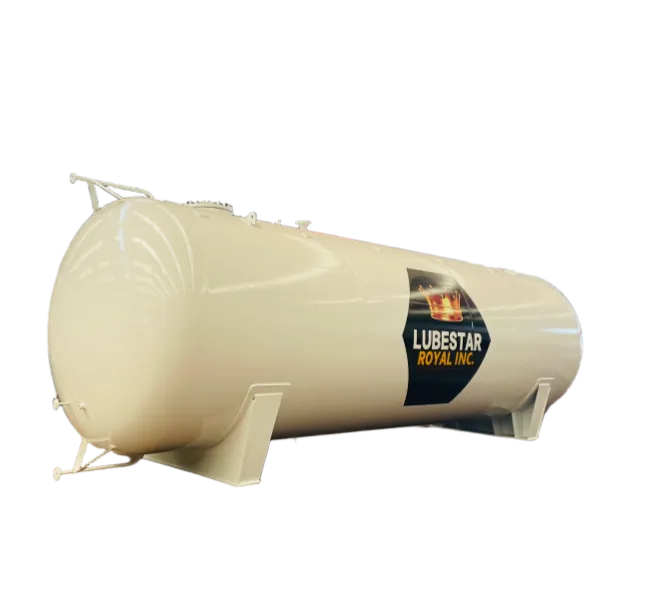
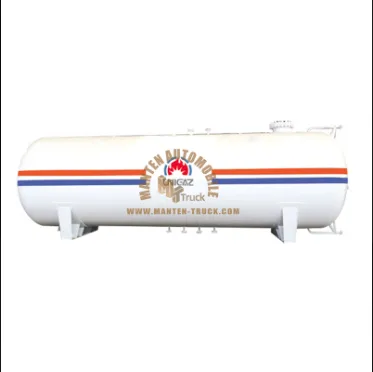
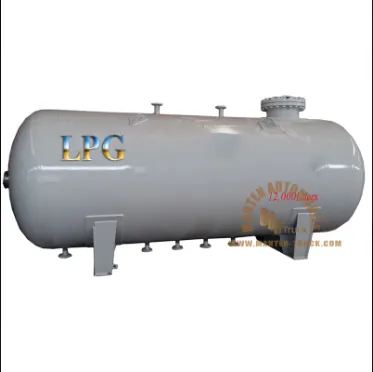
An LPG bullet tank is a horizontal cylindrical pressure vessel commonly used for bulk LPG storage. Its shape provides an efficient pressure-vessel configuration while allowing the tank to be installed horizontally on saddles or other supporting structures.

Large horizontal vessels are frequently used in commercial and industrial LPG storage facilities.

When searching for LPG bullet tank manufacturers, buyers should evaluate the manufacturer's engineering capabilities, fabrication quality, pressure-vessel experience, inspection procedures, and ability to provide supporting documentation.

Manten's LPG storage tank solutions are designed for customers requiring dedicated LPG storage equipment, with configurations available according to project requirements.


10.png


Bulk LPG Storage Tanks for Commercial and Industrial Use


Bulk LPG storage tanks are suitable when LPG needs to be stored in larger quantities rather than delivered exclusively in small cylinders.

For a commercial or industrial facility, bulk storage can provide a more centralized fuel supply and reduce the frequency of individual cylinder handling.

Applications can include:

  • Manufacturing plants

  • Hotels and restaurants

  • Food-processing facilities

  • Agricultural operations

  • LPG distribution stations

  • Industrial heating systems

  • Commercial energy systems

The correct LPG bulk tank sizes depend on consumption and logistics. A facility with high daily LPG demand may require a larger tank or several tanks operating as one storage system.


LPG Gas Storage Tank Price: What Affects Cost?


The LPG storage tank price can vary significantly between projects. Capacity is only one factor affecting the final quotation.

Other important cost factors include:

  • Tank dimensions

  • Steel material

  • Design pressure

  • Manufacturing technology

  • Surface treatment

  • Valves and safety accessories

  • Instrumentation

  • Inspection and testing

  • Transportation

  • Installation requirements

  • Custom engineering

Therefore, an advertised LPG gas storage tank price should not be used as the only basis for comparison.

For example, two tanks with similar nominal capacity may have different design pressures, materials, accessories, inspection requirements, or engineering specifications.

Buyers should request a complete technical quotation so that different suppliers can be compared on the same basis.


How Much Do LPG Bulk Storage Tanks Cost?


The LPG bulk storage tanks cost depends on the complete system rather than only the pressure vessel.

A larger tank normally requires more steel and manufacturing work, but the final project cost may also include foundations, piping, valves, pumps, unloading equipment, safety systems, transportation, and installation.

For a project involving a 60000 propane storage tank, for example, engineering considerations become particularly important because the storage capacity, site layout, pressure-vessel design, safety distances, and associated equipment all need to be evaluated as part of the complete LPG storage system.

Large-scale projects should therefore be treated as engineering projects rather than simple tank purchases.


LPG Storage Tank Suppliers: What Should You Look For?


Choosing reliable LPG storage tank suppliers is critical because LPG pressure vessels require specialized manufacturing and quality control.

Before placing an order, buyers should evaluate:

1. Manufacturing capability – Confirm that the supplier has appropriate pressure-vessel fabrication facilities.

2. Engineering experience – Check whether the supplier can design equipment for the intended application.

3. Quality control – Ask about welding procedures, nondestructive testing, pressure testing, and inspection.

4. Documentation – Confirm that technical drawings, specifications, certificates, and inspection documents can be supplied.

5. Customization – Determine whether the supplier can adapt dimensions and accessories to project requirements.

6. Export experience – International buyers should verify experience with overseas shipping and documentation.

Manten supplies LPG storage equipment and specialized oil and gas industry trucks, providing customers with solutions covering both storage and transportation requirements.


LPG Storage and LPG Transport Systems


Storage is only one part of the LPG supply chain. LPG must also be transported from suppliers or terminals to storage facilities.

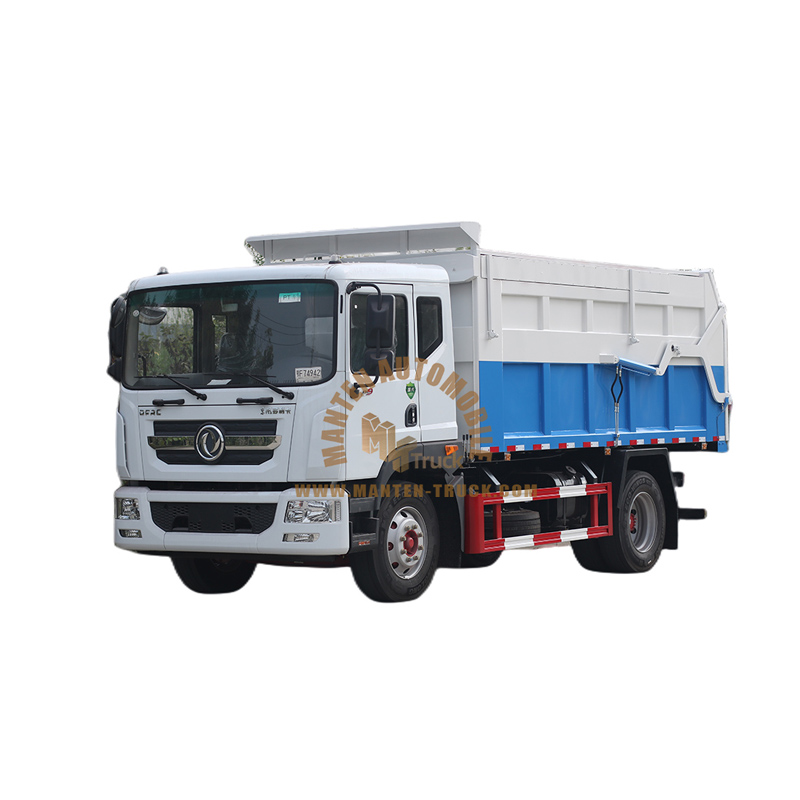
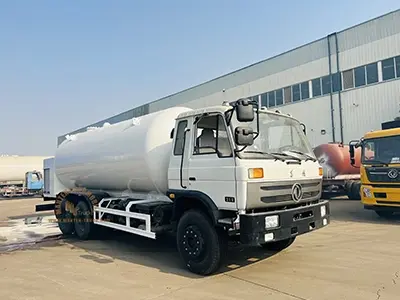
An LPG transport truck can be used to move LPG in bulk between different locations.

For example, an LPG distributor may receive gas by tanker and transfer it into stationary storage tanks before supplying customers. In this type of operation, the storage tank and transport vehicle need to be considered as parts of the same logistics system.

Manten's oil and gas industry product range includes LPG transportation vehicles as well as LPG storage tanks, allowing customers to source equipment for different stages of LPG distribution.


11.png


How to Choose the Right LPG Storage Tank


Before purchasing an LPG tank, buyers should establish several basic requirements.

First, determine the required storage volume based on current consumption and future demand. Next, identify the available installation area and applicable safety distances.

The required LPG storage tank specification should then be established, including design pressure, temperature, material, dimensions, valves, safety equipment, and measurement systems.

Finally, the supplier should confirm that the proposed tank meets the technical and regulatory requirements of the destination market.

This process is more reliable than choosing an LPG tank based solely on the advertised capacity or lowest price.


Why Choose Manten for LPG Storage Solutions?


Manten provides specialized vehicles and equipment for the oil and gas industry, including LPG storage tanks and LPG transportation solutions.

Its LPG storage equipment can be configured according to different capacity and application requirements. By supplying both storage and transportation-related products, Manten can support customers looking for integrated solutions within the LPG distribution chain.

For buyers comparing LPG tanks, storage vessels, or LPG transport equipment, working directly with an experienced manufacturer can simplify communication regarding specifications, customization, inspection, and delivery.


Conclusion


Choosing an LPG storage system requires careful consideration of capacity, pressure, material, dimensions, safety equipment, installation conditions, and applicable regulations.

Whether the requirement is a domestic LPG tank, the appropriate size and specification should be determined by actual consumption and engineering conditions.

For buyers looking for LPG gas storage tanks for sale, Manten provides LPG storage and transportation solutions for commercial and industrial applications. By comparing complete technical specifications rather than focusing only on LPG storage tank price, customers can select a storage solution that better matches their operational requirements and long-term LPG supply strategy.


Related Manten Trucks
Manten Trunks Latest News & Blog
Trucks
ROOM 603, BLOCK 1, FANHAI SOHO BUILDING,JIANGHAN DISTRICT, WUHAN ,CHINA