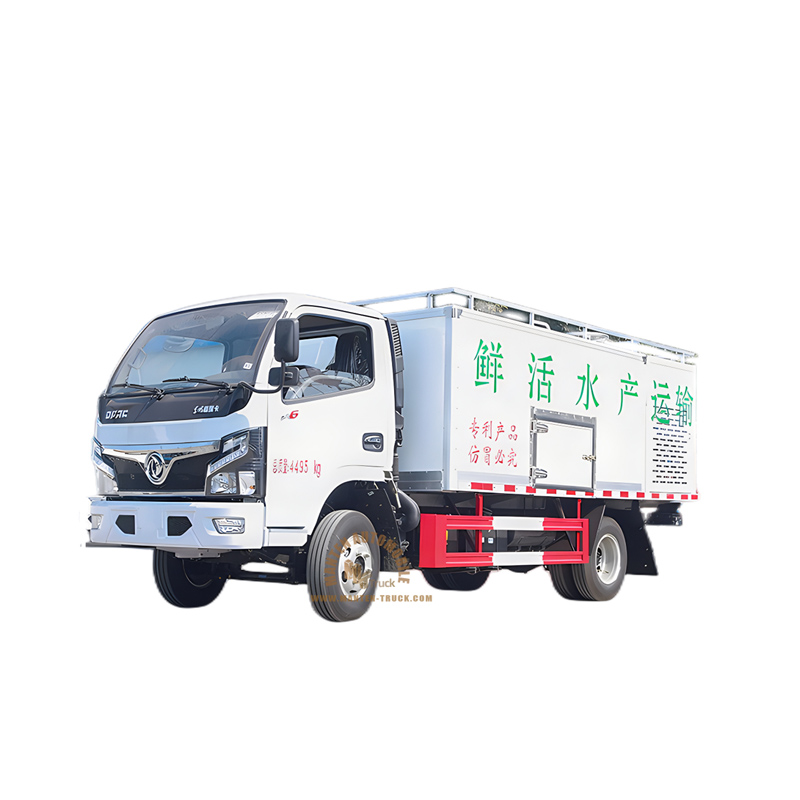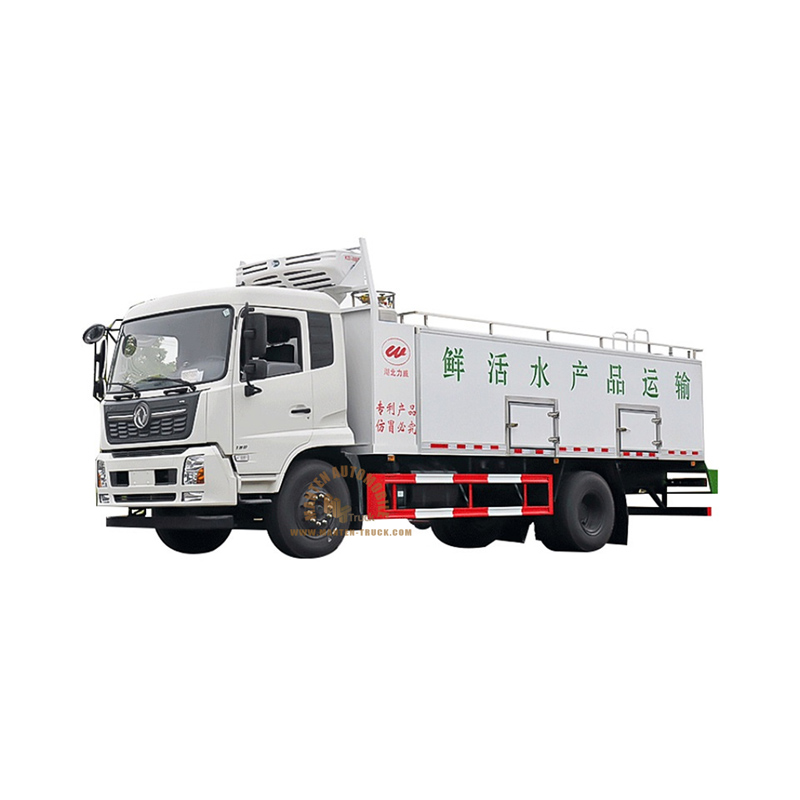
The seafood industry has undergone significant transformations throughout history, revolutionizing the way fish and other seafood products are transported and delivered to consumers worldwide. One remarkable innovation that has played a crucial role in this evolution is the fish carrier truck. In this blog post, we will delve into the history, development, industry impact, and market dynamics of fish carrier trucks, highlighting their vital role in ensuring the freshness and quality of seafood.
Before the advent of fish carrier truck, the seafood industry heavily relied on traditional methods of transportation, such as wooden barrels filled with ice and salt, to keep fish fresh during transit. However, as the demand for seafood grew and distribution distances increased, the need for a more efficient and reliable solution became evident.
The first fish carrier trucks emerged in the early 20th century, leveraging advancements in refrigeration technology. These early trucks featured insulated compartments and ice-cooling systems, allowing for the transportation of fresh fish over long distances. This marked a significant turning point, enabling seafood to reach far-flung markets without compromising its quality.
Over the years, fish carrier trucks have undergone remarkable developments, incorporating state-of-the-art technologies to ensure optimal conditions for seafood transportation. Traditional ice-based cooling systems have been replaced by advanced refrigeration units that can maintain precise temperature and humidity levels, preserving the freshness and quality of the catch.
Additionally, innovations in truck design have focused on optimizing space utilization and improving the overall safety of the fish during transit. Fish transport truck for sale now feature customizable compartments and secure storage systems to prevent movement and damage to the cargo, minimizing the risk of spoilage.
The introduction of live fish transport vehicle has had a profound impact on the seafood industry. Previously, limited regional availability and seasonality greatly influenced the availability of fresh seafood. However, with the ability to transport fish over longer distances, fish carrier trucks have expanded the reach of seafood suppliers, enabling consumers to access a wider variety of fresh catch throughout the year.
Moreover, the development of reliable transportation infrastructure and the growth of international trade have led to increased market opportunities for seafood producers. Fish carrier trucks have played a vital role in facilitating this expansion by ensuring the safe and efficient delivery of seafood products to domestic and international markets, bolstering economic growth within the industry.
The live fish transport truck market has experienced substantial growth in recent years, driven by rising consumer demand for fresh and sustainably sourced seafood. As consumers become increasingly aware of the health benefits associated with seafood consumption, the need for efficient transportation methods to preserve its quality becomes paramount.
Furthermore, stringent regulations and industry standards pertaining to food safety and quality control have further fueled the demand for advanced fish carrier trucks. This has prompted manufacturers to continuously innovate, develop more energy-efficient models, and enhance insulation systems to comply with regulatory requirements while reducing environmental impact.
In terms of market segmentation, fish carrier trucks cater not only to large-scale seafood suppliers but also to smaller local fishermen and fishmongers who need reliable transportation solutions for smaller quantities of seafood. This diversified market landscape offers opportunities for both established manufacturers and emerging players to meet the evolving demands of the industry.
The evolution of fish transport truck has revolutionized the seafood industry, enabling the transportation of fresh fish and seafood products over long distances while maintaining their quality and freshness. Through technological advancements and a growing market, fish carrier trucks have played a vital role in connecting seafood producers with consumers worldwide, supporting the growth of the industry and promoting sustainable seafood practices. As the industry continues to evolve, fish carrier trucks will remain a crucial component in meeting the increasing demand for fresh and high-quality seafood.
Record the Production of Milk Tank Truck for Exporting ProjectJuly 25, 2024Recently, a batch of high-quality milk tanker trucks designed for export have been successfully completed in our workshop , which are about to depart for overseas and inject new vitality into the glob...view
SHACMAN 14 CBM Compactor Garbage Truck and HOWO 8 CBM Compactor Garbage TruckOctober 18, 2022In order to protect the environment, the oversea client chosen our main products: SHACMAN 14 CBM Compactor garbage truck and HOWO 8 CBM Compactor garbage truck.view
MANTEN New Customized LPG Truck Has Been Officially DeliveredJune 1, 2024Manten successfully delivered a batch of customized Dongfeng 24,000 liter LPG refueling trucks to help customers achieve efficient transportationIn the latest development, Manten's highly customiz...view
Isuzu Prime Mover Safety Features and TechnologyJuly 12, 2024When it comes to transporting goods on the road, safety is a top priority for both drivers and fleet managers. That's why having a reliable and advanced prime mover is essential. In this blog, we ...view
Negative Pressure Ambulance System's Principles and ApplicationDecember 24, 2024The negative pressure ambulance system is an important component of modern medical emergency technology. Its core lies in effectively managing and purifying the air inside the vehicle through a series...view
What Are the Reasons for the Puncture of the Sanitation Garbage Dump Truck?May 22, 2023The lifespan of tires is actually a false proposition because it can vary from 50,000 to 200,000 kilometers. Truck tires are the epitome of hard work and are a symbol of endurance and resilience. For ...view