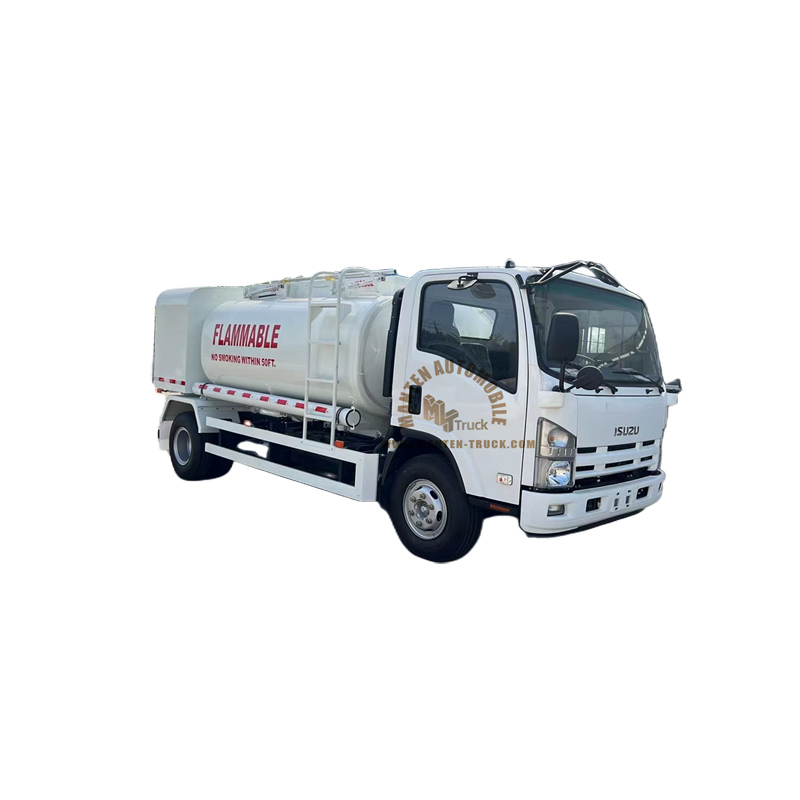
In recent years, frequent accidents involving oil tanker trucks have not only caused significant property losses but also led to casualties, attracting widespread public concern. To ensure the safety of oil tanker transportation and prevent potential risks, this article will elaborate on the safety precautions for oil tanker trucks from multiple aspects.
When loading oil, oil tanker trucks should strictly control the amount of oil loaded. Loading too little oil can result in excessive shaking space during transportation, easily generating static electricity and increasing safety hazards. On the other hand, overloading can cause spillage in vehicles with poorly sealed tank openings, leading to accidents. Therefore, it is recommended that the oil loading be controlled at approximately 85% of the tank's capacity. Additionally, during driving, a moderate speed should be maintained, avoiding sharp acceleration and braking to ensure the oil remains relatively stable within the tank, thereby reducing safety hazards caused by shaking.
Static electricity is a non-negligible safety hazard in oil tanker transportation. To reduce static electricity accumulation, oil tanker trucks should be equipped with properly connected static grounding wires that ensure good contact with the ground. Furthermore, drivers and accompanying personnel must strictly abide by the no-smoking rule, refraining from smoking or carrying fire sources in the vehicle. When parking, the vehicles should be kept away from fire sources and avoided being parked near potential ignition sources to prevent explosion accidents.

Oil tanker, as a vehicle for transporting dangerous goods, its technical condition is directly related to transportation safety. Therefore, the driver should regularly inspect and maintain the vehicle, with a focus on checking the sealing of the fuel filling hole, the leakage of the discharge valve and the discharge pipe, the smoothness of the fuel tank ventilation hole, etc. At the same time, the installation position of the gasification furnace and the exhaust pipe of the internal combustion engine should also meet safety requirements and not be backfilled or installed at the rear of the vehicle. In addition, the electrical equipment on the vehicle must have good insulation and no sparks should be generated.

In case of leaks, fires, or other emergencies during oil tanker transportation, emergency plans should be immediately activated, and the scene should be evacuated promptly while calling emergency services for assistance. The vehicles should be equipped with special fire extinguishers and other emergency equipment to facilitate initial fire suppression. Moreover, drivers and accompanying personnel should receive professional emergency training and drills to enhance their ability to respond to unexpected events.
Recent oil tanker accidents, such as the explosion and burning of an oil tanker in Ya'an, Sichuan, and the rollover and fire of an oil tanker on the Beijing-Shenyang Expressway, have had severe consequences. These cases serve as stark reminders that oil tanker transportation safety cannot be overlooked. It is imperative to strictly abide by all safety regulations and operating procedures to ensure that every aspect of the transportation process is foolproof.

As essential tools for dangerous goods transportation, the safe driving and protection of oil tanker trucks are of paramount importance. By strictly controlling oil loading, maintaining moderate driving speeds, effectively preventing static electricity, keeping away from fire sources, strengthening vehicle maintenance and inspection, and being prepared for emergencies and rescues, we can significantly reduce safety risks during oil tanker transportation and safeguard the lives and property of the people. Let us work together to ensure the safety of oil tanker transportation.
Safety Considerations for High Altitude Operation TrucksJuly 12, 2024When it comes to operating trucks at high altitudes, safety should always be the top priority. One brand that is known for its reliable high altitude operation trucks is MANTEN. These trucks are equip...view
Record the Production of Bitumen Distributor Truck for Exporting ProjectJune 1, 2024In the factory workshop, one set of high-performance asphalt sprinkler trucks is being produced in full swing, and they are becoming the sought-after equipments in the export projects by virtue of the...view
Water Sprinkler Truck Structure and Working PrincipleMarch 4, 2023A water sprinkler truck is mainly composed of two types of automobile chassis, a water tank, a pipe system, and other components. It is suitable for washing and watering operations on various road sur...view
Innovations in Live Fish Transportation: Introducing Manten's Live Fish Transport TruckJune 14, 2023IntroductionThe transportation of live fish is a critical aspect of the aquaculture industry. Ensuring the safe and efficient transfer of fish from hatcheries to markets or other aquaculture facilitie...view
Foam Fire Truck Firefighting Operation ProceduresJune 6, 2025Concept of Foam Fire TruckA foam fire truck is a type of fire truck equipped with a fire pump, water tank, foam concentrate tank, and devices that mix water and foam concentrate. It also features a fo...view
The Benefits of Using Skip Loader Garbage Trucks for Waste CollectionJuly 12, 2024In today's world, proper waste management is crucial for environmental sustainability. Skip loader garbage trucks are versatile vehicles that offer several benefits for waste collection. One of th...view