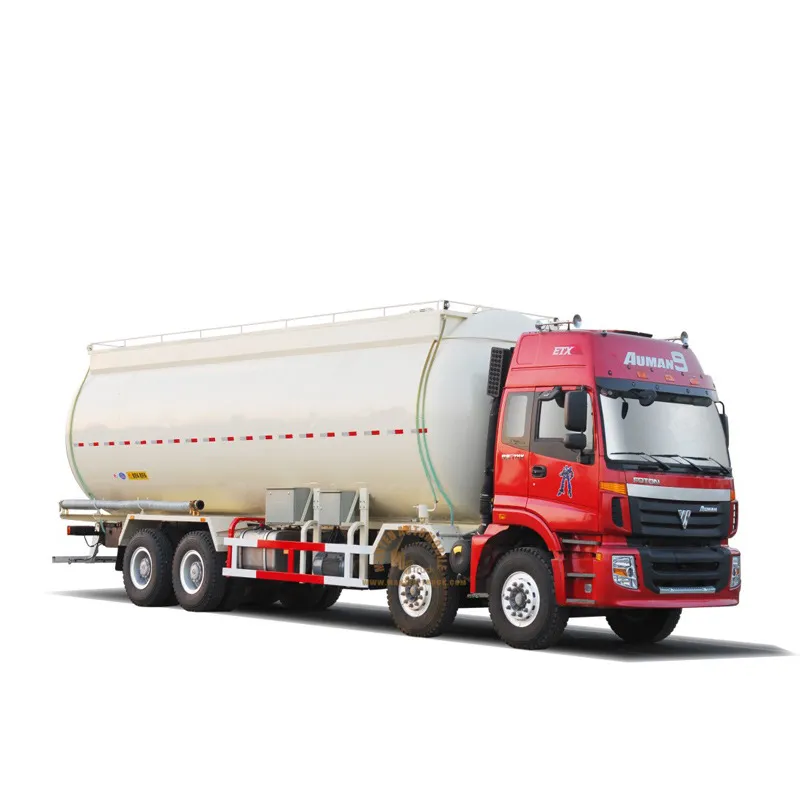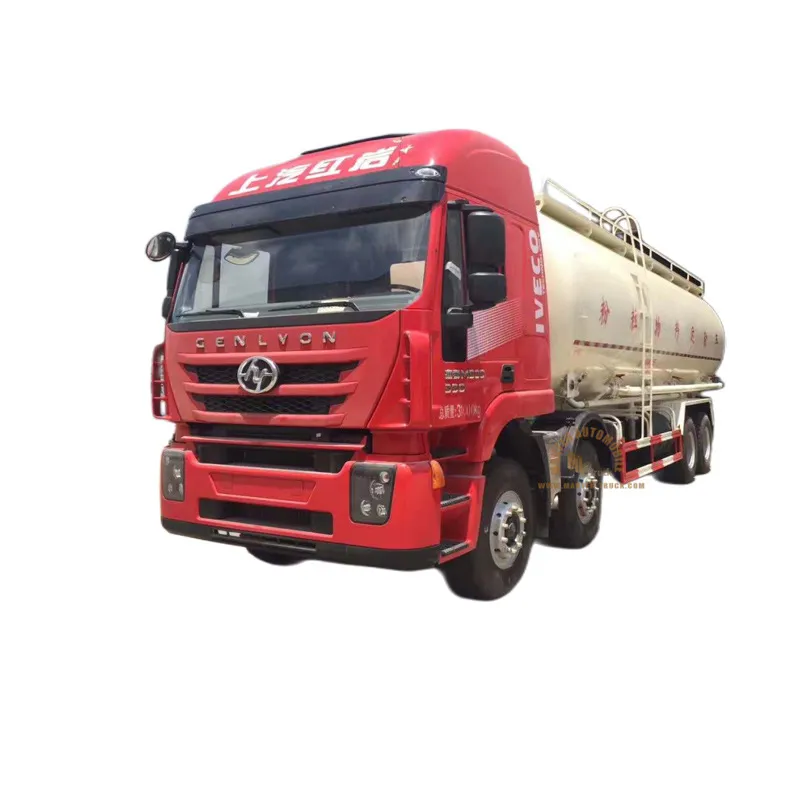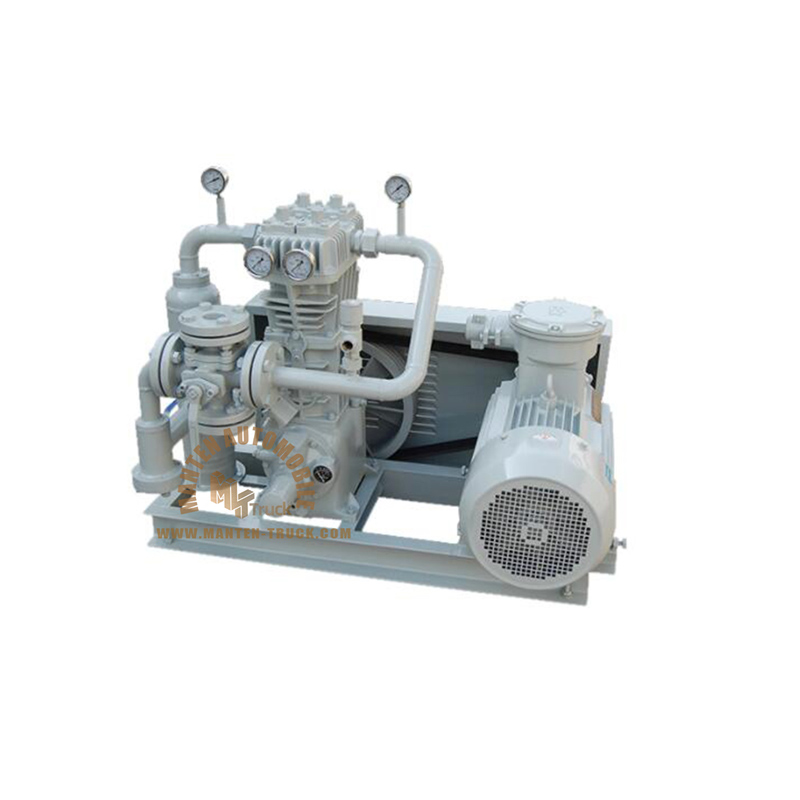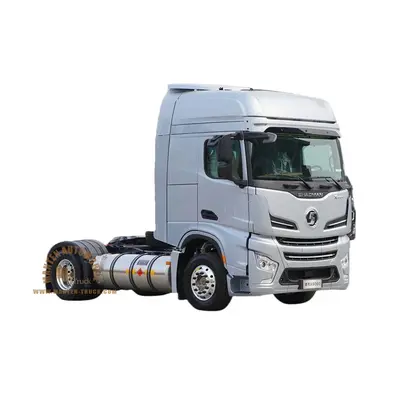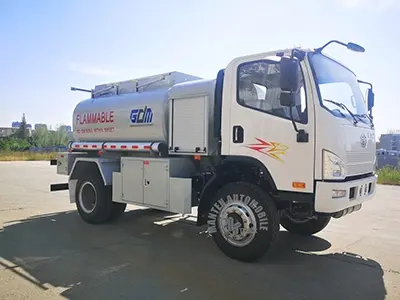
A bulk cement truck unloads dry powder through a pneumatic conveying system. Compressed air supports material movement within the tank and through a discharge line to a receiving silo. Performance depends on the coordinated air supply, tank arrangement, conveying line and receiving system. Compressor power alone cannot establish a reliable unloading time.
This is a dry-bulk transport process. It differs from a concrete mixer truck carrying wet concrete in a rotating drum. For buyers, understanding the air and material paths helps identify the information needed to match a vehicle to a real delivery site. The operating sequence and permitted limits remain specific to the supplied equipment and approved procedures.

At a system level, the compressor supplies air, the tank's internal arrangement helps mobilize the powder, and the discharge system carries material toward the receiving silo. Air and material must pass through a connected system whose operating conditions remain within the approved limits of all relevant equipment.
The conceptual relationship is compressor to tank air distribution, then material outlet and conveying line, followed by the receiving silo and its air-handling system. Actual vehicles can differ in their internal layout and air routing. A manufacturer's flow diagram should therefore be used to identify the paths in the proposed configuration.
Gardner Denver's dry-bulk application overview describes compressed-air equipment used for this transport role. It supports the distinction between supplying air and achieving a complete conveying result. The vehicle's tank and discharge arrangement, the material and the destination installation remain part of the engineering assessment.
The air side includes the compressor and the equipment that conditions, routes or controls its output in the actual installation. The material side includes the tank's discharge arrangement, outlets, connecting line and receiving connection. Monitoring and protective devices belong to the system specification as well as the main mechanical components.
System element | Information needed for matching |
Compressor and drive | Model, performance data and intended operating duty |
Tank and internal arrangement | Approved drawings and material suitability |
Discharge outlets | Dimensions, connection details and supplied equipment |
Transfer line | Diameter, length, bends, condition and connection specification |
Receiving silo | Inlet arrangement, receiving capability and air-handling details |
Controls and protection | Supplied devices, permitted limits and documentation |
Do not treat the silo as an empty container that contributes no resistance or constraint. The receiving installation must accommodate the arriving material and the associated air under its approved conditions. Its inlet, filtration and protective arrangements should be reviewed by the responsible site personnel and equipment suppliers.
The UK HSE introduction to pressure equipment stresses knowing operating conditions and equipment limits. It is a jurisdiction-specific management reference, rather than a source of settings for a cement truck. Those settings must come from the approved documents for the actual system.

Conveying a powder through a long line with bends is a different duty from a short, direct connection. Vertical lift, line diameter and the receiving arrangement also influence the conditions the air and material encounter. A performance statement is useful only when its associated route and material conditions are identified.
Powder properties matter as well. Record the material identity and the relevant supplier information, including characteristics that affect handling. Do not assume that a system specified for one dry bulk product will perform identically with another simply because both materials are powders.
For example, two delivery sites may receive the same consignment mass but require different line lengths and vertical lifts. A vehicle's demonstration at the first site does not establish its discharge time at the second. Compare both locations using the supplier's system assessment and, where agreed, a representative acceptance trial.
Ask whether a quoted unloading time includes vehicle positioning, connection, material transfer and completion activities, or only the conveying interval. The answer changes fleet scheduling. A clear definition also prevents the purchasing team from comparing a complete delivery cycle from one supplier with a narrower test interval from another.
Build one interface sheet that the vehicle supplier and receiving-site team can review together. Identify the planned material, consignment size, access position, transfer-line route and receiving connection. Attach a site sketch showing horizontal distance, lift and bends; a simple overall distance can conceal a very different conveying path.
Interface field | Buyer or site information to supply |
Material | Product identity and relevant handling characteristics |
Delivery task | Expected quantity and the defined delivery-time objective |
Truck position | Access, parking and distance from the receiving point |
Line route | Internal diameter, length, bends and vertical rise |
Connections | Agreed sizes, types and compatibility information |
Receiving system | Silo inlet, available capacity and air-handling specification |
Acceptance record | Material, configuration, conditions and measured result |
Include ownership of each item. The transfer hose, fixed pipe and receiving inlet may come from different parties. A missing interface can remain unnoticed if each supplier assumes another party is responsible. The final proposal should identify the complete connected arrangement and any information still needed to finish the assessment.
Use a separate record for each significantly different receiving site. This makes it easier to distinguish a common fleet configuration from a site-specific limitation and to keep later route changes visible.

Start with the current bulk cement truck range, then ask for a proposal linked to the interface sheet. Confirm the chassis, tank configuration, compressor and drive, discharge equipment, completed dimensions and mass information. Identify what is supplied with the vehicle and what belongs to the receiving site.
Manten's bulk cement truck selection guide provides a broader procurement context. The unloading-system review should add the actual compressor data, transfer-line information and silo requirements. Tank volume and a compressor power figure are useful fields, but they do not replace this connected assessment.
The Gardner Denver construction-materials application page places dry-bulk air equipment within materials transport. For a specific order, request model-level performance information and the supplier's assessment of the proposed conditions instead of transferring an application overview into a guaranteed unloading rate.
Agree how performance will be documented. A representative test record should identify the material, transferred quantity, vehicle configuration, line route, receiving installation and the start and finish definitions used for timing. This creates a usable reference if the fleet later serves a different silo or changes the transfer-line arrangement.
Video: Manten bulk cement tanker trailer video.

Separate three acceptance questions in the proposal. The vehicle review establishes the supplied equipment and configuration. The interface review establishes compatibility with the stated transfer line and receiving installation. A performance trial, where agreed, records what the connected system achieves under identified conditions. None should be represented as covering information absent from its scope.
This distinction is useful for fleets serving several customers. Keep a site record with the receiving details and the vehicle configurations assessed for it. If the fixed line is extended, a connection changes or a different material is introduced, the record shows which assumptions need another review. The fleet can then discuss the changed duty with the suppliers using specific information rather than asking why a previously quoted time no longer matches a different installation.
No. The dry-bulk vehicle discussed here transports powder and uses pneumatic unloading. A concrete mixer truck handles wet concrete using a different body and discharge arrangement. Establish the actual material before comparing vehicle categories.
No. Compressor performance, material behavior, tank arrangement, line geometry and receiving conditions all contribute. Ask for performance evidence tied to stated conditions and a clearly defined timing interval.
Provide the material, delivery quantity, proposed truck position, line diameter and route, lift height, connection details and receiving-silo information. The responsible site team should confirm the receiving installation's capabilities and approved requirements.
Pneumatic unloading connects a vehicle to a receiving installation through an air-and-material flow path. The useful purchasing question is whether the proposed system matches that complete path under the intended conditions. Nominal tank volume and compressor power answer only part of it.
Send Manten the material and silo interface sheet with the vehicle enquiry. Agree the equipment boundaries and performance record before comparing proposals. The resulting configuration can then be assessed against the delivery route it is expected to serve.
Unleash Power and Performance with Manten Prime MoversJune 12, 2023IntroductionWelcome to Manten Prime Movers, where power, reliability, and efficiency converge to transform the logistics industry. As a leading provider of prime movers, Manten offers a wide range of ...view
Types of Dump Trucks: Body, Chassis and Job-Site Differences ExplainedNovember 20, 2026The main types of dump trucks can be described by unloading direction, vehicle combination and operating terrain. These are separate classification axes: a rear tipper may be a rigid road truck, while...view
Guardrail Cleaning Trucks in Industrial and Commercial SpacesJanuary 26, 2024Guardrail cleaning is a vital task that is often overlooked in the maintenance of industrial and commercial spaces. Dirty guardrails not only create an unsightly appearance but can also pose serious s...view
Safe Driving and Protection of Oil Tanker Trucks: Ensuring Transport Safety and Preventing Potential RisksJuly 25, 2024In recent years, frequent accidents involving oil tanker trucks have not only caused significant property losses but also led to casualties, attracting widespread public concern. To ensure the safety ...view
Prime Mover Manufacturers and Their Impact in Logistic SolutionsJanuary 26, 2024In today's fast-paced world, logistics plays a vital role in ensuring the seamless movement of goods from one place to another. With the advent of technology and increasing demand for efficient tr...view
What Are the Differences Between Civil and Military Firefighting Trucks?April 19, 2023With the rapid development of the economy, the awareness of fire safety among the country and people continues to increase. Nowadays, the proportion of purchasing firefighting trucks in enterprises an...view